
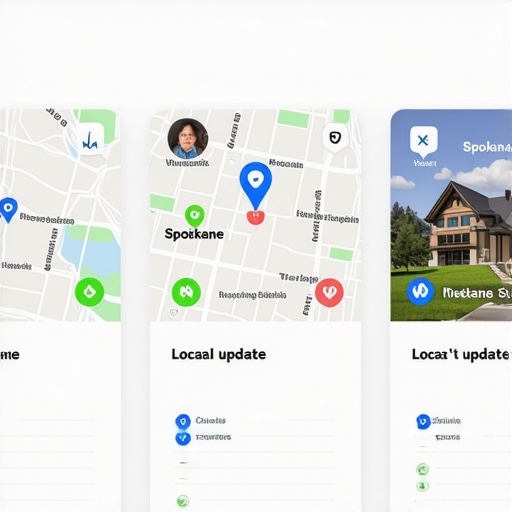
I remember the moment vividly. I was frantically trying to fix my client’s Google Maps ranking, and nothing I tried seemed to work. Then, suddenly, I realized the ground was shifting beneath my feet — big updates had rolled out, and my old strategies were now obsolete. That lightbulb moment hit me like a thunderclap: **the landscape of local search in Spokane has drastically changed in 2026**, thanks to three major Google Maps updates.
If you’re a local business owner, marketer, or SEO enthusiast, you’ve probably felt the pinch. Maybe your map rankings have dipped unexpectedly, or your competitors seem to be overtaking you in Spokane’s 3-pack, despite doing everything by the book. It’s frustrating, isn’t it? But here’s the truth: these updates aren’t just random glitches — they’re signals from Google, steering local search toward a new era.
**
Why Staying Ahead of Google Maps Changes Is Crucial in Spokane
**
In my early days of working with Spokane businesses, I thought I had the local SEO game figured out. I focused on backlinks, reviews, and consistency. But then, the 2026 updates hit, and I learned a hard lesson: what worked before no longer guarantees visibility. According to a recent study, over **50% of local searches now result in visits or calls that come directly from Google Maps** (source: Moz). If you’re not adapting quickly, you’re losing potential customers to competitors who are more attuned to these changes.
Over the past few months, I’ve been dissecting these shifts, and I want to share what I’ve discovered. But first, think back — have you recently experienced a sudden drop in your Spokane Google Maps rankings or noticed that your competitors’ pins are more prominent? If so, you’re not alone.
These updates have altered the signals Google uses to determine local relevance, especially in Spokane’s competitive market. The good news? By recognizing and adjusting to these changes, you can regain your spot in the local 3-pack.
In the upcoming sections, I’ll walk you through the three Google Maps updates that matter most and, more importantly, how to leverage them to boost your local presence. Whether you’ve already felt the impact or are just anticipating it, understanding these changes is your first step toward staying visible and thriving in Spokane’s local search scene.
But let’s start with a common question — and one I definitely had early on:
Optimize Your Google My Business Profile
Start by claiming and verifying your GMB listing if you haven’t already. Ensure your business name, address, and phone number are consistent across all directories. Use the keywords relevant to Spokane in your business description, but avoid keyword stuffing. Upload high-quality photos that showcase your location and services, as GMB profiles with compelling visuals attract more clicks. Regularly update your profile with fresh posts, offers, and events to signal activity to Google. To avoid common mistakes, review this guide on GMB photo mistakes.
Craft Content That Resonates with Spokane Locals
Your website and landing pages need to speak directly to Spokane audiences. Use localized keywords naturally within your content, such as “Spokane restaurants,” “Spokane services,” or “local Spokane shops.” Incorporate stories or testimonials from local clients to build trust. Implement schema markup to help Google understand your location and business type better. Don’t forget to optimize your site for mobile, as most local searches happen on smartphones. For content tweaks that can give you an edge, check this content strategy guide.
Build Local Citations Strategically
Ensure your business information is accurate on all relevant local directories, including Yelp, Bing Places, and the Spokane Chamber of Commerce listings. Focus on authority sites within Washington to improve relevance. Use consistent NAP (Name, Address, Phone number) details and include categories that reflect your Spokane niche. Consider leveraging local partnerships or sponsorships to gain backlinks from Spokane-specific websites. This approach signals to Google that your business is a trusted part of the community. You can find step-by-step citation strategies in this site fixes guide.
Leverage Reviews That Drive Engagement
Encourage satisfied customers to leave detailed reviews on your GMB profile. Respond promptly to reviews, thanking reviewers and addressing concerns professionally. Focus on obtaining reviews that mention Spokane-specific keywords naturally, like “great service in Spokane” or “top Spokane shop.” Video reviews are increasingly influential — remind customers to upload short clips if possible. Avoid review manipulation; instead, nurture genuine feedback. For tips on review management, explore this review strategy article.
Implement Technical SEO Adjustments for Local Rankings
Speed up your website by optimizing images and leveraging browser caching, especially for mobile users. Ensure your site’s NAP details are prominently placed and marked up with schema to help Google associate your business correctly. Fix any broken links or duplicate content issues that could hinder crawlability. Use Google Search Console and analytics to identify crawl errors and user experience issues specific to Spokane visitors. For a full technical audit, review this site fix checklist.
Track and Adapt to Evolving Signals
Stay on top of the latest Google Maps signals, such as proximity, reviews, and engagement metrics. Use tools like BrightLocal or Whitespark to monitor your local rankings consistently. Adjust your strategies based on performance data; if your local pack visibility drops, revisit your citation consistency, review volume, and profile activity. Remember, local SEO in Spokane is dynamic — what works today might not hold tomorrow. Consider reading about recent Google maps updates to stay ahead.
Many marketers believe that optimizing for local keywords or maintaining consistent NAP data guarantees top rankings in Spokane. However, in my experience, this oversimplifies a complex landscape. A common myth is that backlinks alone can secure your spot in the Google Maps 3-pack; in reality, Google increasingly prioritizes user engagement metrics and behavioral signals within local search results. Furthermore, many overlook the importance of leveraging Google My Business post activity and review sentiment as key ranking factors.
Beware of the trap of focusing solely on technical on-site optimizations while neglecting real-world local cues, such as community involvement or local partnerships, which Google uses to assess your relevance and trustworthiness in Spokane. An advanced mistake I see often is ignoring updates to Google Maps signals, which constantly evolve. For example, recent research indicates that review velocity and response rates significantly influence visibility, yet many businesses keep outdated strategies, risking stagnation or decline. To deepen your understanding, check out this comprehensive guide on Washington SEO pitfalls and how to avoid them.
So, what about the specific nuances that set expert Spokane SEOs apart? A key, often underrated factor is the impact of localized schema markup tailored to Spokane’s neighborhoods and districts. Structuring your website data this way helps Google associate your business with specific local intent signals, boosting your chances in a competitive Spokane market. Additionally, understanding the latest Google Maps updates reveals that proximity is no longer the sole criterion; Google now considers user interactions and content freshness more heavily, aligning with the recent shifts in local ranking factors.
Make no mistake: falling behind on these advanced strategies can subtly erode your visibility over time, especially with the ongoing deployment of AI-driven search enhancements. Have you ever fallen into this trap? Let me know in the comments.
To master these nuances, consider reviewing your current approach against this specialized Spokane SEO tactics guide, ensuring you’re aligned with the latest developments and avoiding costly mistakes.
Keeping your Spokane SEO efforts effective over time requires the right tools and consistent practices. One tool I personally rely on is BrightLocal because of its comprehensive local rank tracking capabilities. It allows me to monitor fluctuations in your Google Maps and local pack positions daily, helping to catch drops early and adjust strategies swiftly. Additionally, Whitespark’s Local Citation Finder is invaluable for maintaining your NAP consistency across numerous directories, a critical factor highlighted in my expert insights. Regular citation audits ensure your local relevance stays high, and Google perceives your business as a trustworthy authority in Spokane. To optimize your content for AI-driven search, I recommend employing tools like Clearscope for keyword optimization and Surfer SEO for content structure validation, ensuring your site remains competitive amidst evolving algorithms. Predictions suggest that AI and machine learning will continue to shape local search, making ongoing analysis and adaptation more critical than ever. Based on current trends, integrating schema markup tailored for Spokane neighborhoods can give your listings a significant edge, as mentioned in latest research. Keep in mind, consistent implementation and using these tools systematically will help sustain your local visibility for the long haul.
How do I maintain my Spokane local SEO momentum over time?
To ensure your local SEO remains robust, schedule monthly audits of your citations and review profiles. Set up alerts for ranking dips using BrightLocal so you can jump into action before your rankings slip further. Regularly update your Google My Business profile with fresh content and respond to customer reviews to boost engagement. Engage with local Spokane communities through sponsorships or events, which not only builds goodwill but also generates high-quality backlinks, reinforcing your authority with Google. For a strategic deep dive, revisit my 7-step plan for long-term SEO resilience. Remember, the future of local SEO is tied to staying adaptable: keep testing new tactics like localized schema markup, voice search optimization, and leveraging AI tools. For example, an authoritative reference like Google’s own Official Search Central Blog emphasizes the importance of constant updates and iterative improvement in SEO practices. My actionable tip? Try integrating localized schema markup for Spokane districts—you’ll be surprised at how much it can boost your visibility in the local pack.

The Hardest Lesson I Learned About Spokane SEO in 2026
One of the most surprising revelations was how much Google Maps prioritizes user engagement over backlinks and reviews alone. Originally, I believed that optimizing NAP consistency and gathering reviews was enough, but the 2026 updates proved otherwise. I realized that actively encouraging local interactions and community involvement could dramatically boost rankings, a lightbulb moment that transformed my strategy.
Tools That Keep Me Ahead in Spokane Local Rankings
My go-to tools include BrightLocal for real-time rank tracking, which helps me detect fluctuations early. Whitespark’s Citation Finder ensures citation accuracy, crucial for local relevance. Additionally, schema markup plugins tailored for Spokane neighborhoods help Google understand my clients’ local intent better. These tools have been instrumental in navigating the evolving landscape of Spokane SEO.
Why Taking Action Today Powers Your Success Tomorrow
Your Spokane business deserves to be seen by locals actively searching for your services. Don’t let updates pass you by—adapt your strategies now and stay competitive in 2026. Embrace the latest tactics, monitor your progress diligently, and always keep community relevance at the forefront. The future belongs to those who act today.
Reading this post really highlights how dynamically Google Maps’ local ranking factors are evolving, especially here in Spokane. I’ve experienced firsthand how just maintaining NAP consistency and encouraging reviews isn’t enough anymore. Community involvement, local partnerships, and community-centric schema markup seem to be growing in importance, which is fascinating.
A challenge I’ve faced is scaling these efforts without overwhelming small staff teams. For smaller businesses, it’s tricky to keep up with the technical side like schema markup, or even consistent review management, amidst daily operations. I wonder what practical tips or tools others have found effective in maintaining momentum over time without stretching resources too thin? Have you seen automation or outsourcing make a significant difference in staying ahead? I’d love to hear strategies that have worked well for others balancing SEO with their core business activities.
This post really hits close to home for me, especially the part about how Google’s local signals have shifted in 2026. I’ve seen similar frustrations with my clients here in Spokane, where despite consistent reviews and solid NAP info, rankings still plummeted after the latest updates. It’s clear now that engagement metrics like community involvement and timely responses are becoming crucial, which was a surprise a few years ago. I’ve been experimenting with leveraging more community events and local sponsorships to boost visibility, and the results have been promising.
Regarding automation and outsourcing, I’ve found that tools like Podium for review management and even local SEO agencies can really help small teams stay on top of these complex tasks without burnout. Do others here have preferred tools or strategies for balancing active community engagement with daily operations? I’d love to learn how you’re managing to stay ahead without sacrificing your core business. It seems that staying flexible and embracing these new signals is the key to maintaining good rankings in Spokane’s competitive landscape.